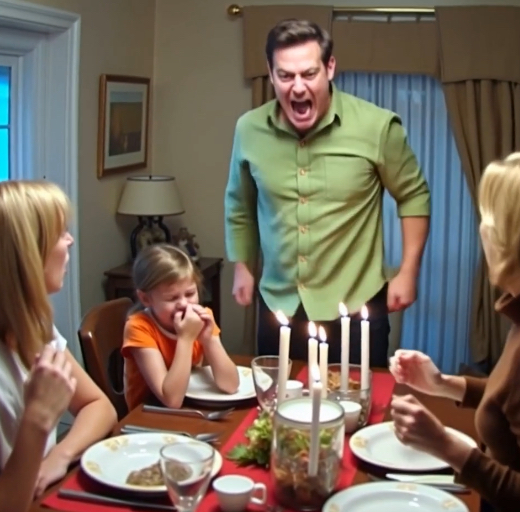
 “Lily is not a bargaining chip.”
The words seemed to hang in the air, reverberating around the room like the final note of a symphony. Harold’s posture stiffened, his eyes narrowing in disbelief as if he couldn’t comprehend being challenged. Diane’s hand fluttered to her chest, her mouth forming a silent “Oh.”
Mark let out a breath. He wasn’t finished. “We promised her this trip because she earned it. She’s worked hard, done well in school, and this is her reward. It’s not a negotiation. It’s not something to be bartered away.”
Tara shifted uncomfortably, and Vince took an interest in his mashed potatoes, clearly wishing he were anywhere else. Mason, oblivious to the undercurrents, was still swinging his legs, waiting for the adults to resolve whatever this was.
Mark continued, his voice steady but firm. “Being older doesn’t mean giving up what’s important to her. It means knowing what’s right and standing by it. Sacrifices are made for things that matter, for choices we make ourselves, not for obligations others try to impose.”
I saw the resolve in Mark’s eyes—a man who had drawn his line in the sand. I reached over and squeezed Lily’s hand, watching color return to her cheeks. She looked at her father, a spark of hope rekindling in her eyes.
“I will not teach my daughter that her happiness is less important than keeping peace at a dinner table,” Mark added, his gaze unwavering.
Harold opened his mouth to respond, but nothing came out. It was Diane who gathered enough of her composure to say, “We were just trying to—”
“To what? Teach her a lesson?” Mark interjected, his tone softer now but no less resolute. “She’s thirteen, not thirty. She deserves the magic of being a kid, not the burdens of an adult.”
The silence that followed was thick, laden with unspoken words and reassessed priorities. Tara and Vince exchanged glances, a silent conversation passing between them.
Finally, Harold sighed, a sound that seemed to deflate him. He nodded, though it was more of a concession than agreement. “Alright,” he said, voice grudgingly softening. “I understand.”
Lily’s eyes glistened with unshed tears, but she smiled—a small, grateful smile that spoke more than words could. Mason, still blissfully unaware, resumed his leg-swinging, the drama evidently having missed him altogether.
Dinner resumed, conversations shifting, though the atmosphere had irrevocably changed. Lily whispered a quiet “Thank you” to her father, who smiled back, the bond between them reaffirmed in the crucible of family dynamics.
As we left that night, hand in hand with our daughter, I felt a new kind of warmth—one borne from the understanding that, in our little family, love would not be used as currency, and our daughter would always know her worth.
And so, as the car pulled away, leaving the grand house behind, Lily’s spirit soared higher than the gates of Disneyland ever could.