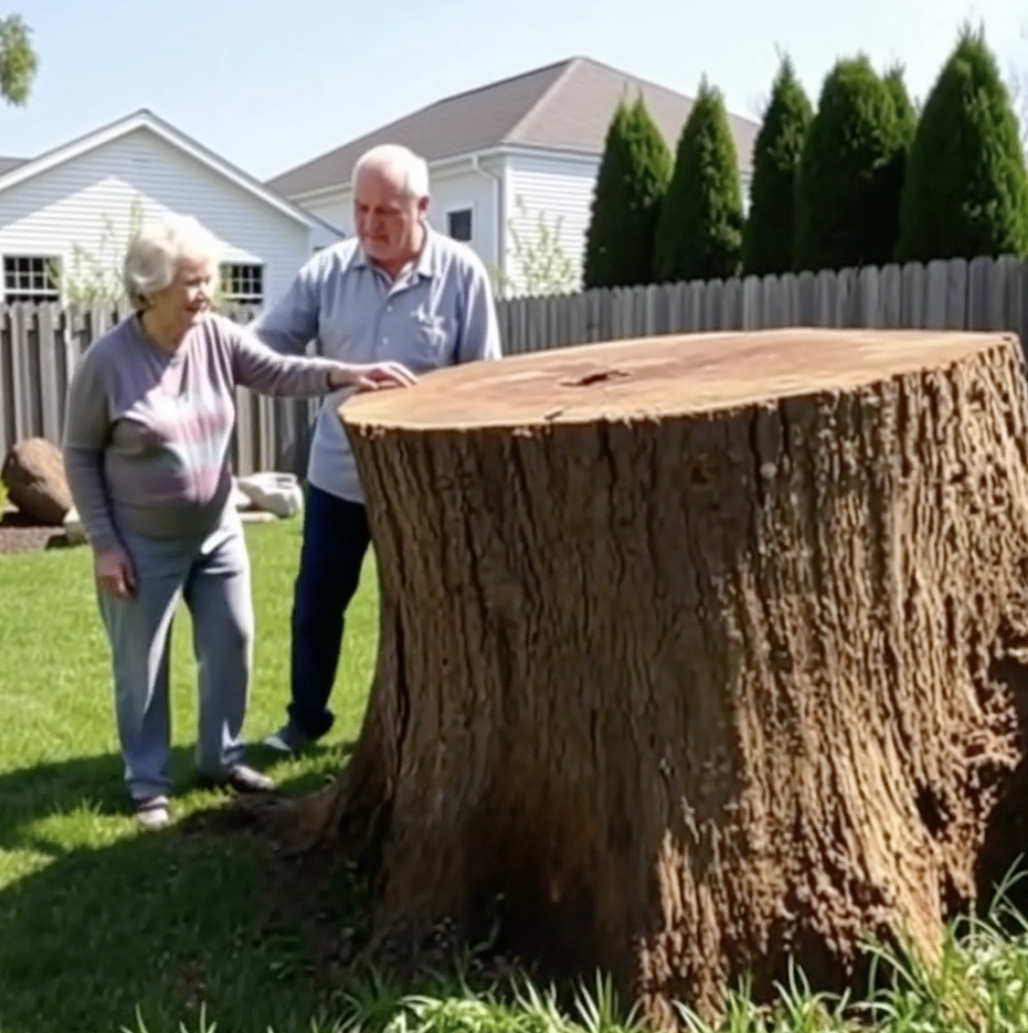
 …casting an eerie glow over both our yards. The lights flickered once, then settled into a steady, unsettling brightness that bled into the night.
My mother, still reeling from the day’s events, sank into the worn-out armchair by the window, her eyes fixed on the illuminated stump as if waiting for it to tell her its secrets. My father, on the other hand, couldn’t sit still. His mind, always analytical, was running through every possible scenario that could explain what we’d witnessed.
“Why would Collins lie?” he muttered to himself, pacing back and forth. “And why would he let those men in without saying a word to us?”
The questions hung in the air like ghosts, refusing to be exorcised until we had answers. I decided to do some digging of my own. While my parents were preoccupied, I slipped away to my room, my laptop under my arm.
A quick search online revealed a wealth of information on illegal tree removal and the black market for rare woods. But somehow, I doubted this was a simple case of lumber theft. There was something more to it — the silence, the precision, and, most of all, Mr. Collins’ involvement.
I turned to social media, hoping to find a local group or forum where residents discussed neighborhood issues. A few scrolls through various posts brought me to a thread titled “Strange Occurrences in Oakwood.” My heart skipped as I read stories similar to ours. Old trees disappearing, sometimes entire gardens altered without permission or explanation.
I posted our experience, hoping someone might have an idea or a similar story to tell. Within minutes, the thread was alive with responses, but none offered a concrete answer. One comment, however, stood out: “Check the old town records. Some trees have roots deeper than history.”
Puzzled but intrigued, I decided to follow the advice. The next day, I headed to the town’s archives, a dusty, forgotten building nestled between newer, shinier structures. Inside, the air was thick with the smell of aged paper and neglect. A gray-haired curator looked up as I entered, her eyes curious.
“I’m looking for records on properties on Elm Street,” I explained, hoping she wouldn’t ask too many questions.
The woman nodded and disappeared into the labyrinth of shelves. When she returned, she handed me a stack of yellowed documents tied with fraying twine.
“Be careful with these,” she advised. “Some histories have a way of getting lost.”
Back home, I spread the documents across my desk. Hours passed as I poured over the information, piecing together a narrative of our neighborhood that I’d never known.
Among the records, I found land deeds, notes about expansions, and, finally, a survey from decades ago. It showed not just our property lines but an intricate map of roots — roots that spanned beneath several properties, including Mr. Collins’. The trees, it seemed, were part of a network, a silent community of their own.
But why was one cut down? Why now?
As the night deepened, I thought about our neighbors. Had they experienced something similar, or were they blissfully unaware of the silent war beneath their feet?
I knew one thing for sure: This was far from over. Someone, or something, had disturbed the balance. And as I shut the documents, one thought echoed in my mind: our tree may be gone, but its story was just beginning.