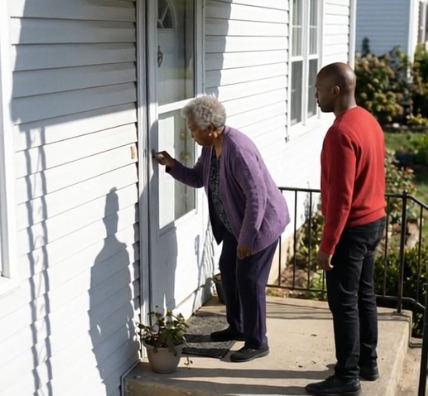
 I stepped out of the car, my heart pounding in my chest, and approached the house cautiously. It was hard to reconcile this vibrant, well-maintained property with the humble, aging home I remembered from my last visit. Had I made a mistake? Was this some kind of illusion crafted by my grief-addled mind?
As I stood there, a woman emerged from the house. She was younger than Doña Clara, with sharp eyes and an air of confidence. She paused upon seeing me, a flicker of recognition crossing her face. Before I could speak, she called back into the house.
“Mama, tienes visita.”
Moments later, Doña Clara appeared at the door. She looked healthier, more robust than I remembered. I was relieved, but the relief was short-lived, overshadowed by confusion.
“Roberto,” she said, her voice tinged with a mix of surprise and something else—was it guilt? “What are you doing here?”
“I came to see you,” I replied, struggling to keep the tremor out of my voice. “The bank needed new information. I tried calling, but…”
She waved me inside, avoiding my gaze. I followed her, clutching the gifts I had brought, as if they were a shield against the questions battering my mind. Inside, the house was just as immaculate as the exterior. It was clear that money had been spent here—my money.
We sat in a tastefully furnished living room, a world away from the faded furniture I remembered. The younger woman joined us, introducing herself as Rosa, Doña Clara’s niece.
“I wanted to make sure you were alright,” I explained, still grappling with the incongruities. “I haven’t heard from you in a while.”
“I’ve been fine,” Doña Clara replied, her eyes flitting to the floor. “Rosa moved in a while ago. She’s been helping me a lot.”
As we talked, the pieces slowly fell into place. Rosa had convinced Doña Clara to invest in the house and car, assuring her that it was a smart move. My monthly contributions funded this new life—a life I hadn’t been informed of, a life that seemed to disregard the solemn promise I had made to Marina.
I felt betrayed, but more than that, I felt lost. The connection to Marina that I had nurtured so carefully now felt like a lie. Had I been honoring her memory, or simply binding myself to an obligation that no longer existed?
“Why didn’t you tell me?” I asked, my voice barely above a whisper.
Doña Clara hesitated, tears welling in her eyes. “I didn’t want to worry you,” she confessed. “You did so much already, and I thought… I thought it was time to let you move on.”
Her words stung because they rang true. I had clung to the ritual, the sense of duty, because it was easier than facing the void Marina left behind. But now, confronted with the reality, I realized I had been living in the past, shackled by a promise that, perhaps, Marina never intended to be so binding.
As I left, Rosa handed me a small package. “Marina wanted you to have this,” she said softly, her eyes gentle with understanding.
Back in my car, the fading sunlight casting long shadows on the road ahead, I opened it. Inside was a journal, Marina’s handwriting filling the pages. Notes, thoughts, dreams—her essence captured in ink.
Reading her words, I felt her presence, not as a ghost of the past, but as a guiding light, urging me to finally embrace the future.
As I drove away from the village, I knew my monthly ritual had come to an end. But in my heart, Marina remained, not as a haunting memory, but as a cherished part of my journey forward.