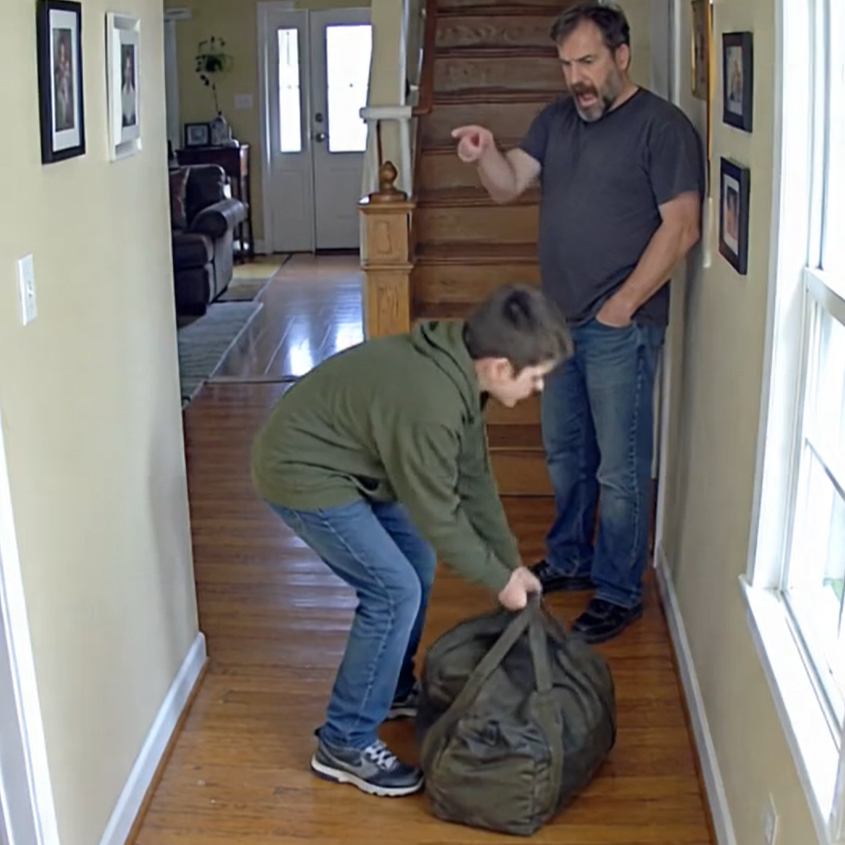
 I put down the phone and stared at the wall, my mind racing. The voice on the other end had been calm, but there was an edge to it—a quiet power that made me uneasy. I knew I had to go to that gallery, even though every part of me wanted to stay away.
Saturday arrived quicker than I expected. The day was bright, the sky clear, but inside, my chest felt heavy. I drove to the address given to me, my mind swirling with questions and fears. What had the boy become? What truth was I about to confront? I had no answers, only an urgent sense that my past was catching up with me, and I could no longer ignore it.
The gallery was a modest space, tucked between larger buildings. Its exterior was unassuming, but as I stepped inside, the atmosphere changed. The walls were covered with paintings—each a vivid portrayal of emotion and life. They captured moments of loneliness, strength, and resilience. People wandered the room, whispering appreciatively as they passed each piece.
And there, in the center of it all, stood a young man—composed, confident, and familiar.
He turned when he saw me, a flicker of recognition in his eyes. I stopped in my tracks, heart pounding. It was him. The boy I had thrown out ten years ago. Only now, he wasn’t a boy. He was an artist, standing tall among his creations.
“Thank you for coming,” he said, his voice steady. He didn’t sound like someone seeking revenge or retribution. Instead, there was a quiet dignity about him, a strength that took me by surprise.
“I… I didn’t know,” I stammered, unsure of what to say.
He nodded, understanding. “You didn’t know, and that’s why you’re here now.”
I swallowed hard, looking around at the paintings. “These are yours?” I asked, though the answer was obvious.
“Yes,” he replied. “Each painting tells a story. My story.”
I felt a pang of guilt, wishing I had been a part of that story, had been there to support him when he needed it. But that time had passed, and now I was facing a reality I had long ignored.
As we walked through the gallery, he stopped in front of a particular painting. It was a portrait of a woman—my wife. Her eyes seemed to follow me, full of warmth and secrets.
“She loved you,” he said softly, gesturing to the painting. “She always said you gave her a life she never thought possible.”
Tears threatened to spill over as I faced the truth I had refused to acknowledge for so long. It wasn’t just about the boy anymore. It was about the life I had shared with his mother, the life I had tried to suppress after her death.
“There’s something you need to know,” he continued, his voice gentle but firm. “She never wanted to tell you because she feared it might change everything. But the day she died, she was planning to. The truth is, I am your son. She wanted to wait for the right moment to tell you. That moment never came.”
The world seemed to stop. The room faded, and all I could hear was the sound of my own heartbeat, loud and insistent. I had driven away my own son, blinded by anger and pain.
“I’m sorry,” I whispered, the words catching in my throat. “I should have been there for you.”
He nodded, his expression softening. “We can’t change the past. But we can try to understand it.”
As the gallery buzzed around us, I realized this was not the end of our story. It was a new beginning. There was so much more to uncover, to learn, to heal.
And so, as the evening drew to a close, I knew there was a part 3 to this story. Our journey was far from over. If you want to read more, leave a comment below the Facebook post.